
The Water Industry Measures Everything Except What Matters Most
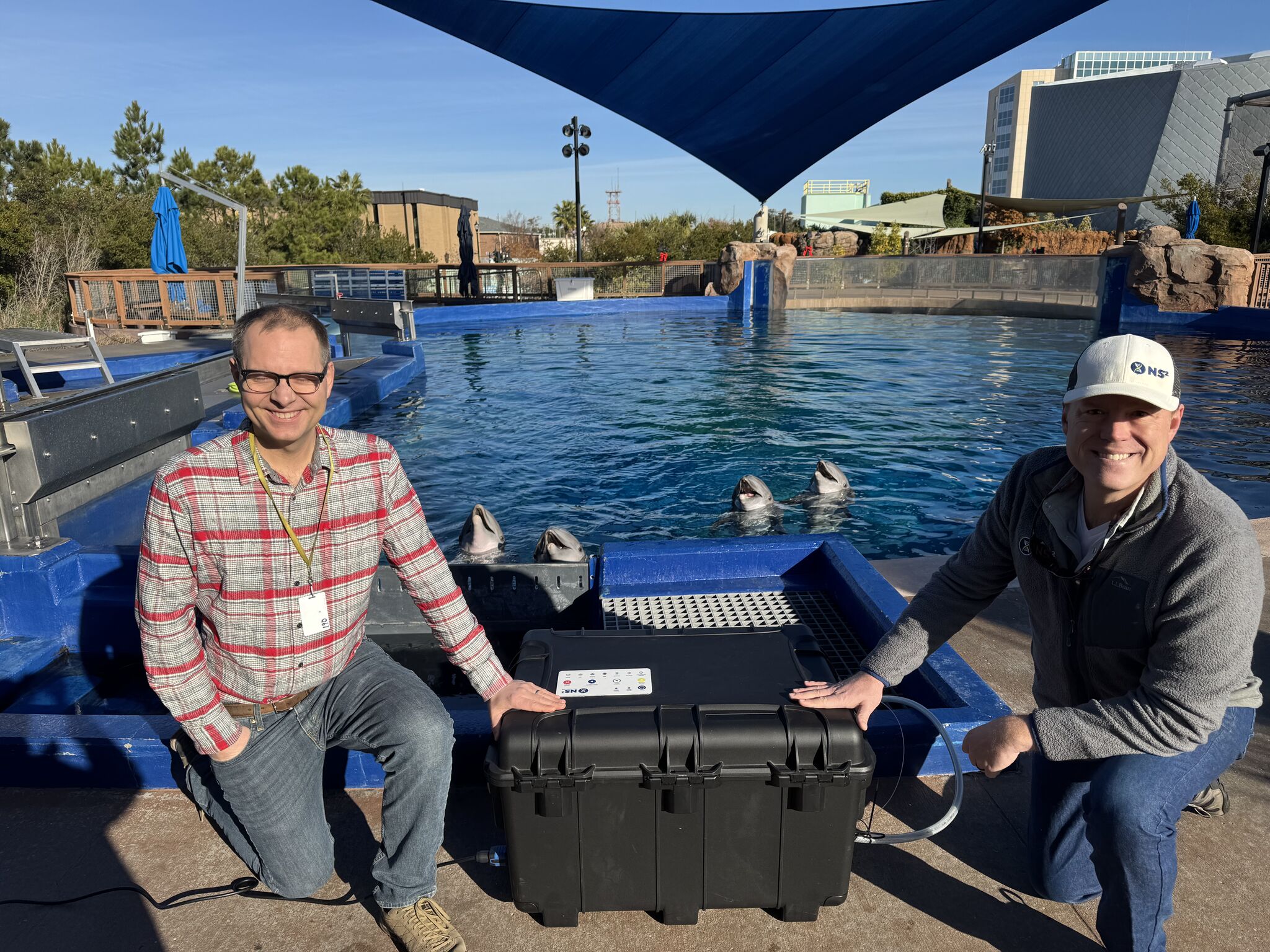
We're pretty good at measuring water.
pH, dissolved oxygen, temperature, turbidity — the physical and chemical parameters of a water system are well-documented, well-monitored, and well-understood. There are solid companies with decades of history serving that market. The gear works. The data flows.
But there's a massive blind spot hiding in plain sight.
"We do a great job measuring physical and chemical parameters," Ed Rudberg told me on a recent episode of Below the Surface. "But we're doing a terrible job quantifying biology."
That one sentence is essentially the founding thesis of Nucleic Sensing Systems (NS2) — and it reframes the entire conversation about where water infrastructure is most vulnerable.
From COVID Swabs to Water Systems
Ed's path to water is not a straight line. It runs through biology degrees, a communications minor, graduate work in marine affairs and policy, stints at state environmental agencies, a PhD in natural resource science, and a string of ventures ranging from rain barrels to invasive species monitoring to Fortune 500 sustainability reporting.
What ties it all together is a recurring frustration: science that doesn't communicate, and data that arrives too late to act on.
The technology at the heart of NS2 grew out of work on environmental DNA — specifically, the challenge of detecting invasive species like quagga and zebra mussels in Western waterways before they follow infrastructure to new systems. A mentor introduced Ed to droplet digital PCR, a human diagnostic tool already used to detect things like COVID with high sensitivity. The question became: what happens when you point that tool at the environment instead?
The answer, as it turns out, is that you can "swab the environment's nose 20,000 times" with a single water sample — detecting genetic concentrations of biological material at a precision and speed that conventional lab methods can't touch. Sample to answer in under an hour, rather than days or weeks waiting on an offsite laboratory.
Applications include drinking water quality monitoring, disease detection in aquaculture (up to a month before physical symptoms appear), and wastewater biology — an area that has always relied heavily on biology to function, but rarely measures it in real time.
The Problem With Being Too Early
There's a particular kind of difficulty that comes from building genuinely useful technology in a conservative industry. Ed described it plainly: people are calling NS2 interested in buying before the company is positioned to sell.
"It's terrible as a CEO to say, I'd love to sell you something today, but I can't," he said.
That tension — between market pull and commercialization readiness — is one of the defining challenges for deep tech companies in water. The traditional VC playbook doesn't map well here. There's no hockey stick adoption curve. The customer base is cautious by design. Hardware development cycles are long and capital-intensive. And the buyers — utilities, municipalities, aquaculture operations — often have constrained budgets even when they're genuinely interested in innovation.
Ed's approach has been to treat it as a sequencing problem rather than a market problem. While NS2 continues deepening its presence in water through pilots and early contracts, the company is simultaneously pursuing beachhead markets in aquaculture and animal health — sectors where biological detection is already valued and the path from pilot to purchase is shorter. The goal is to generate the sales and data needed to prove the model while the longer water infrastructure adoption curve plays out.
"You have to find a phased opportunity," Ed explained. "A beachhead market that's more quickly adopting, so you can generate momentum, get those sales, get the capital to move everything forward — while the broader adoption takes place over a longer period."
What Happens When Funding Goals Don't Match Development Timelines
The deeper issue Ed raised — and one that resonates across the water tech startup community — is the structural mismatch between investor time horizons and deep tech development realities.
Venture capital, designed around software economics, typically expects exits in five to seven years. Deep tech, particularly in regulated infrastructure markets, may take eight to ten. The math doesn't work. And as Ed noted, it's one reason AI has "sucked a lot of the oxygen out of the room" for sectors like water — not because the underlying technology is more valuable, but because the return timeline is more predictable.
His concern about AI as a buzzword tracked closely with what I've heard from others in this space: the word is now applied so broadly that it's stopped meaning anything useful. What matters isn't whether you've slapped an AI label on your pitch deck. It's whether you have data that supports the predictions you're claiming to make. For NS2, that's the core value proposition — not AI itself, but the biological data that makes AI-driven water management credible in the first place.
"We don't provide the Tylenol that takes your kid's fever down," Ed said. "We provide the thermometer that tells you your kid has a fever."
The Funding Gap No One Talks About Enough
If there's one structural reality that every water tech founder eventually runs into, it's this: the industry's most pressing problems are chronically underfunded relative to their importance.
Ed put it in stark terms. We're reactive as a country when it comes to water. We wait until scarcity becomes crisis before we invest in prevention. "We were one snowpack season away in the Sierras of really valuing water in this country," he said. Communities in South Africa and Mexico City have already faced that reckoning. We haven't. And so the urgency that should be driving investment into early-stage water technology often isn't there until it's too late.
That makes programs like SBIR — Small Business Innovation Research grants from the federal government — critically important. NS2's early development was substantially funded through SBIR, and Ed made a point of advocating for the program's continuation. It's not a replacement for venture capital or commercial revenue, but it's often the thing that keeps a deep tech company alive long enough to reach either one.
For founders navigating this landscape, Ed's advice is worth sitting with: get connected to the organizations that exist specifically to bridge the gap between startups and water utility customers. Imagine H2O, Current, Cleveland Water Alliance — these aren't just networking groups. They're nodes of credibility, introduction, and sometimes early funding that can mean the difference between a technology that scales and one that stalls in pilot purgatory.
What "Value" Actually Means to a Utility
One exchange in our conversation stuck with me. Ed talked about what happens when you pitch a technology based on its ability to reduce headcount — to take a job that requires ten people down to one. In government-operated utilities, that pitch often falls flat. Not because the efficiency isn't real, but because the customer isn't buying efficiency in that form.
The value has to be defined by the end customer, not the vendor. What matters to the operator running a mid-sized utility isn't workforce reduction — it's risk reduction. It's the ability to catch a biological event before it becomes a public health crisis. It's compliance certainty. It's actionable data in the hands of the person who has to make a call at 2 a.m. when something shows up in the system.
Founders who internalize that distinction will sell more. Founders who don't will keep wondering why technically superior products lose to incumbents.
One More Thing Worth Saying
Near the end of our conversation, I asked Ed what he wished he'd known at the beginning.
"It's going to be hard," he said. "It's going to be real hard. Deep tech is hard and it's going to take more time and more money than you ever thought it would."
That's not discouragement. It's clarity. The founders who make it through the valley of death in water tech are the ones who understood what they signed up for and prepared accordingly — finding patient capital, building beachhead markets, getting connected to the right support ecosystems, and staying focused on what the customer actually needs, not just what the technology can do.
NS2 is still early. But the problem they're solving is real, the technology is validated, and the people running it understand both the science and the sales cycle well enough to have a genuine shot at getting it to scale.
---
Ed Rudberg is the CEO and co-founder of Nucleic Sensing Systems (NS2). You can learn more at ns2co.com or connect with Ed on LinkedIn.
This post is based on my conversation with Ed on Below the Surface with Paul Balsom, a podcast for water industry operators, founders, and marketers. Listen wherever you get your podcasts.
Check other blog posts
see all


.jpg)