
Don't Build a Brand. You Uncover the One You Already Have.

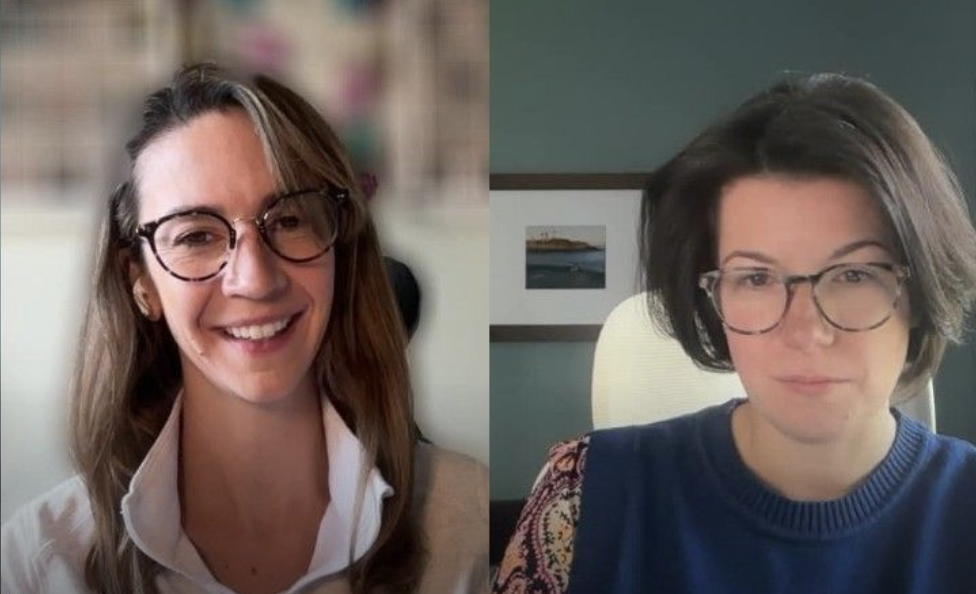
Beth Boeh has been in the water industry for 30 years now, which she'll be the first to tell you makes her feel old. Like so many water stories, hers was accidental. After taking a temp position at a gas-feed instrumentation company outside Philadelphia, she landed in the marketing department, and never left the industry. After a series of corporate changes, layoffs, and job changes, Beth started helping a few small companies with their marketing as a "side gig." That side gig — founded in 2012 — is now Boeh Agency, a full-service marketing and PR firm that works exclusively in water and wastewater.
She and I have a lot in common: both fully focused on water, both convinced the industry deserves better marketing than it usually gets. Here's what stuck with me from our conversation.
The introvert's case for showing up
Beth describes herself as an introvert, which surprises people because she's anything but shy at a trade show. "Take me to WEFTEC and I'm nonstop," she said. "You would never say, 'that's an introvert.'" The difference is energy. The shows light her up and drain her in equal measure — she had 30 meetings scheduled across two or three days— and then she needs solitude to recharge.
What I found worth pulling out, especially for the founders who tell me they "aren't good at networking," is why it works for her anyway. It isn't a sales push. "I have a genuine interest in people in water and the technologies," she said. "I care about people's lives more than their jobs." Work comes from that, but it's a byproduct, not the goal. The lesson isn't "be more extroverted." It's that consistent, genuine presence in a tight-knit industry compounds. You don't have to love selling to build a pipeline. You have to actually care about the people.
Strategy first, every time
A few years ago, Beth's agency would take a project — a case study, a campaign — and run with it. Now every engagement starts with strategy. "We always start with strategy," she said. "We develop a plan to get them from where they are now to where they want to be."
This is the cyclical pattern I run into constantly as a fractional CMO. A company comes to you because they don't have anyone in-house to execute, or because they genuinely don't know what to do. You build the strategy. Then the obvious question lands: okay, who's going to execute this? More often than not, the answer is the person who wrote it. Beth's model resolves that loop by keeping strategy and execution under one roof, paired with strategic account managers who actually know water.
Her signs for a good-fit client are refreshingly concrete. Budget, leadership buy-in, and timing. And one softer signal that matters more than it sounds: trust. "You have to be able to let go a little bit," she said. An engagement struggles when the person who wants the marketing has no time for it and no one else is dedicated to it. If you're a CEO who knows you "should do something" but isn't sure what, that's not a disqualifier — that's exactly the exploratory conversation a good agency or fractional CMO wants to have. No pitch deck. Just: where are you now, and where do you want to be?
Hire for water first
Boeh Agency was hiring as we talked, so this was top of mind for her. When I asked whether she optimizes for water knowledge or marketing chops, she didn't hesitate: in her strategic account manager role, water comes first. "We need to be able to speak water — understand what's happening with data centers and PFAS and whatever's happening in the moment."
But the magic, she said, is the balance. Her creative team comes from outside water — food packaging, beer, makeup, jewelry — and brings fresh ideas that water people wouldn't. "It's this sort of balance between old water people and fresh new ideas for execution." Water marketers are rare enough that she finds them almost entirely through her network and her team's connections, not job boards. If you're trying to build a team in this space, that's the reality: the talent doesn't come to you, you go find it.
The brand was always there — you just have to uncover it
Beth's agency went through a significant rebrand in the last year or so, and she was her own client for it. The line that stuck with me: "We didn't create anything new. We just sort of uncovered what was already there."
That reframe matters for an industry full of skeptics. "The brand is not the logo," she said. "The brand is who you are that's different." It's your technology and what sets it apart, but also your values, what you're like to work with, the story behind the company. When a buyer has a choice between several ways to do the same job — disinfection, say — they gravitate toward people whose values and goals align with theirs. "So many people in water just don't feel like they can get ahead, even though they have an amazing technology, because they haven't established that brand."
She also made a point I'd hand to every engineer-led company: marketing isn't one-size-fits-all messaging. "How do you talk to engineers versus how you talk to end-user utilities versus how you communicate to your reps? Everybody's looking at it from different angles." Telling your story specifically to each audience is itself part of brand.
How do you know branding is "working"?
This is the hard one in our industry. We're engineering-heavy and nuts-and-bolts: I pay for something, I get something tangible. Brand feels mercurial by comparison, which makes it a long conversation with founders. Beth's answer was practical. Less than a year after her rebrand, she could already see the ROI — not as a number on a dashboard, but in the kind of conversations she was having.
"People remember us more because our look is distinctive," she said. The rebrand attracted clients who care about brand, which elevated the work away from one-off deliverables toward "how do we help you get your company to your growth goals." There's an education piece, and Beth is clear that's part of the fun of working in water: it's technical, it's public health and safety, and nobody adopts something new when what they have is working. That's exactly why specialization matters.
Overspending on paid, underspending on PR
I asked Beth for a hot take: one tactic water companies overspend on, one they underspend on. She knew it might annoy her own team.
Overspending: paid digital advertising. "In this space, I've not seen as much success as people in other spaces," she said. Print is a different story, but paid digital ROI in water has underwhelmed her.
Underspending: PR, or more precisely, earned media. "It develops thought leadership, establishes credibility, and it's earned — it's not a transaction where you're paying for it." This is where her agency genuinely excels, because it's built on knowing the editors and decades of relationships.
The new reason PR matters: AI
The timing of this one was almost too good. A previous guest told me PR is having a renaissance partly because it feeds AI and LLMs. Beth's team had just written an article for The Wellspring (their blog) making the same point, citing a Muck Rack publisher report.
The gist: earned media is increasingly where AI tools pull their information. "Paid isn't where you'll rise to the top in AI and chat — earned media is." That meaningfully changes the value calculation for PR. Beth is careful to caution, as she always has, that PR is not lead generation. "It's about building brand and authority." But the AI shift adds a new, concrete reason to invest in it.
One caution worth repeating from Beth: don't expect PR to behave like a lead funnel. "If I do this, then I'll receive that" is the wrong mental model. It builds authority and visibility — which, increasingly, is what AI surfaces.
Authenticity is the moat against AI slop
With AI-generated content flooding LinkedIn, trade publications, and company blogs, I asked how she advises clients to stand out. Beth uses AI herself — mostly to help run a business she'd never run before, and for ideation — but not to write client work. "It's kind of obvious when AI is being used," she said. "There's a place for it, but it can't be the only way. It's not authentic, and that's what people want to read." Boeh Agency uses actual writers and technical writers. In a sea of generated sameness, the authentic, specific, human-written piece is what cuts through.
Where water marketing is headed
Beth doesn't love predictions, but she was certain about the through-line of the last few decades: the rise of storytelling. The ubiquitous 1990s water drop is, mercifully, fading. "The biggest change I've seen is this emphasis on actual storytelling — not just putting out ads." The quality and authenticity of water marketing have climbed dramatically, and she expects more of the same: less collateral and sales enablement for its own sake, more brand, more "who are you as a company, what do you represent, what do you care about." In water, she noted, it's natural to be a little mission-driven.
So, on the board for the future: storytelling and brand building.
The one thing she'd tell every water CEO
I always close by asking guests for the single thing they'd tell every water CEO. Beth's was less advice than a gentle slap on the wrist — and it's a distinction I think the industry badly needs:
"It's not sales. Marketing is a way to grow the business that works with sales, but marketing and sales are not interchangeable. Marketing sets the table for sales."
The two functions are getting merged in people's minds — one team gets the leads, one closes them, and it's all reduced to leads. But the Venn diagram overlaps less than most people assume. Lead generation flows out of good marketing; it isn't the whole job, and marketing isn't just a feeder for the sales team. Set the table, then let sales eat.
Listen to the full episode
Beth and I get into her accidental 30-year path into water, what it's really like to run an agency as an introvert, the mechanics of her rebrand, and how she's advising clients to navigate the AI shift.
If you're a founder, an operator, or a marketer in water, it's worth your time. You can reach Beth on LinkedIn or at boehagency.com — just don't blind-call her.
Check other blog posts
see all

.jpg)